
Is Australian Shepherd Right Dog for You? Experts Guide
Australian Shepherd, also known as Aussie, an Australian breed that came to the US is one of the most beautiful herding breeds. This medium sized dog has medium length fur, which is extremely famous for its striking appearance. Aussies are said to be powerful, intelligent, hardworking, and loyal, proving themselves as the best companions for active people and families.
Also, they are energetic in exercise, sports, herding, and search and rescue operations. One of the best things about them is that they can be your therapy dogs. because they are eager to please and love to play interactive and supportive roles. Moreover, their empathetic nature makes them a suitable choice in the therapeutic settings due to their soft and aiding capabilities.
Let’s dive into the details of Aussie dogs to decide whether it’s the right breed to have as a pet in any family.
Breed Overview
Before you make up your mind to have this breed, get acquainted with the useful information along with its pros and cons. It helps a dog owner have a better understanding of what they are investing in.
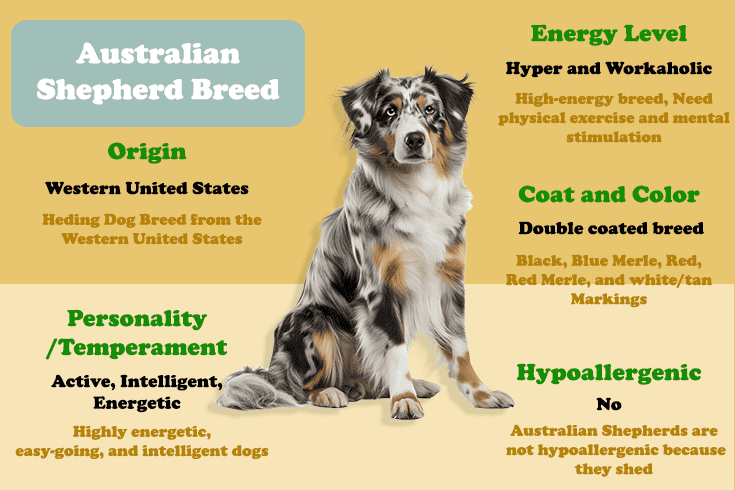
01out of 03Australian Shepherd Breed Overview
| Features/ Characteristics | Specifications |
| Origin | Western United States |
| Group | Herding |
| Weight (Pounds) | 50-65- Male/ 40-55 Female / Mini Aussies 20-40 |
| Height (Inches) | 20-32 Male/ 18-21 Female |
| Personality/Temperament | Active, Intelligent, Energetic |
| Energy Level | Hyper and Workaholic |
| Coat and Color | Black, Blue Merle, Red, Red Merle, and white/tan Markings |
| Hypoallergenic | No |
| Life Span | 12-15 Years |
02out of 03Pros of the Australian Shepherd
- High Intelligence, Affectionate, and Loyal
- Energetic, Playful, and have Protective Instincts
- Good with Kids, Versatile, and Adaptable
- Engaging Companions, and have an eagerness to please
03out of 03Cons of the Australian Shepherd
- High energy levels require training, exercise, and mental stimulation
- Not having enough mental stimulation can cause behavioural issues
- Can be highly cautious of strangers
- Can suffer from hip dysplasia and eye problems
Breed History & Origin
Aside from the breed name, there’s more to dig into about Australian Shepherd dog history and its earliest roots. About its origin, it is believed that its ancestors came to the US from Australia and used to live near the Pyrenees Mountains. It descends from European herding dogs and came along with some Australian breeders in the hope of finding the best cattle land. Upon crossing the United States border, they made their way to California. These were called Basque dogs due to the people they came along and later were named as Australian Shepherds.
They kept on improving in the US and soon became popular in Western culture. What we know today as rodeo and ranch dogs are basically the refined or mixed breed of Aussies. This breed was officially recognized by the American Kennel Club in 1991. Also, the Miniature American Shepherd, a smaller version of the Aussie, was later recognized in 2015. Being an extremely active and hardworking breed, Aussies have been working as therapy dogs, drug detectors, service dogs, and search and rescue dogs. Aussies have strong working, herding, and guarding instincts because they have been herding anything from birds, kids, sheep, cattle, and other animals.
Australian Shepherd Dog Characteristics
Dogs are renowned mainly for their characteristics, which makes it easier for dog owners to make a compatible choice. Every herding breed characteristics are different, so get to know about Aussies’ features from the following table.
| Characteristics | Specifications |
| Affection Level | Medium |
| Kid-Friendly | High |
| Pet-Friendly | Medium |
| Exercise Needs | High |
| Playfulness | High |
| Energy Level | High |
| Intelligence | High |
| Barking Tendency | Medium |
| Shedding Amount | Medium |
| Trainability | High |
Color and Coat
Australian Shepherds are medium sized dogs with a strong, athletic build and unique double coat. A variety of colors are available for the coat, pattern, and even for their eyes. The most common coat colors are Blue Merle Australia Shepherd, Red merle, black, red, and often have white or tan markings. The outer coat of this dog is weather-resistant, while the inner one is super soft.
The straight and wavy coat colors of Australian Shepherds often feature on the legs and neck. Also, the eyes are almond-shaped and can be blue, brown, amber, or even a combination. Another prominent feature is a naturally short and bobbed tail. Sometimes, you find eyes with marbled patterns having different colors in the same eye.
Australian Shepherd Dog Temperament and Nature
Aussies are famous for being exuberant, smart, and work-oriented. This breed, with its good, keeled, and supportive nature, is best suited to be a part of any family. As they belong to the herding group, they might not be suitable for every household. However, if you need an energetic dog that can be trained to work with you, the Australian Shepherd dog temperament is good.
Other than being super active and mentally stimulated, they are very loyal, intelligent, and have strong character. They are moderately friendly, but with a proper introduction, they properly warm up and socialize. Parents with kids will definitely want to have it because the Australian Shepherd temperament and behavior are worth it when they are well-socialized. But you will need to direct their herding tendency to avoid behavioural and Australian Shepherd barking issues.
Grooming and Care
With its excellent adaptable nature, they prove to be the best family companion. They amazingly adapt to active households when they offer them proper exercise, training, and grooming facilities. Australian Shepherd dog care involves bathing, skin care, nail cutting, coat shedding management, dental brushing and checkups, eye checkups, and ear cleaning.
Make sure you deep clean every part of your dog routinely. Brush their coat and fur to prevent mats and tangles. You can invest in some Australian Shepherd grooming tools, like different brush types for double-coated dogs, and don’t forget their tail. The main thing is double coat shedding, which happens every year, so frequent brushing is needed.

Training and Exercise
Another thing that involves the Mini Australian Shepherd care guide is the dog’s training and exercise. For Australian Shepherd exercise needs, frequent activity and mental or physical stimulation are crucial, or else they can be bored, destructive, and frustrated. At least reserve 1-2 hours daily for their running or walking activity.
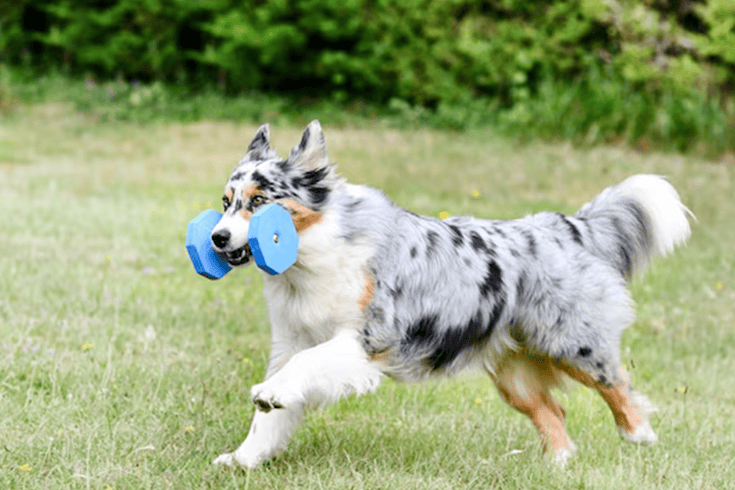
Aside from that, you can play fetch or frisbee, and hide and seek by setting a puppy training schedule. One of the best Australian Shepherd training tips involves introducing some custom jumping games in your backyard. Puzzle toys can also play an important part in keeping them energetic. Besides, training in dog sports like flyball, rally, disc, and nose work. These enrichment activities with the intent of chasing, moving objects, cars, and even other animals.
Health Problems
Standard or Mini Aussie health concerns are another major point that every owner must evaluate at the time of purchase. That’s because it directly impacts the Australian Shepherd energy level and activity. Though Australian Shepherd puppy and dogs is a healthy breed, they can be prone to certain serious health issues. The health conditions they might face are:
01out of 05Eye Problems
In Aussies, eye conditions are very common, like cataracts, which result in cloudy, opaque, and decreased vision. Also, they face progressive rod cone degeneration (PRCD) that affects cones and rods, and Canine Multifocal Retinopathy (CMR) that results in retinal detachment.
02out of 05Epilepsy
In standard or miniature Australian Shepherd dogs, the most found epilepsy is idiopathic epilepsy, an inherited condition leading to seizures and abnormal brain disturbance. This disorder doesn’t have a genetic test, but it can be cured with an anti-seizure medication.
03out of 05Cancer
Lymphosarcoma and Hemangiosarcoma are the cancers that are often found in these Australian Shepherd puppies. In Lymphosarcoma, the body forms abnormal lymphocytes, found as swollen lymph nodes., Hemangiosarcoma causes increased incidence of bleeding tumors in the abdomen, affecting the liver/spleen.
04out of 05Blindness and Deafness
Australian Shepherd aussie puppies can also be affected by deafness and blindness issues. Coat color-controlling genes can affect the hearing of these dogs due to a lack of pigment around the head or ears. It not only affects hearing but also impacts vision. Sometimes the condition is hereditary in double merle dogs.
05out of 05Hip/Elbow Dysplasia
Like deafness and blindness, it is also a hereditary problem that is due to improper development of the elbow and hip joints, resulting in a malalignment condition. A dog may experience mobility issues like osteoarthritis and suffer pain in this condition.
Diet and Nutrition
Before having them, make sure you know what to feed an Australian Shepherd. Being an active breed, these dogs need high-protein food to stay energetic and powerful. Ideally, they must be fed complete and nutritionally balanced dog food, two meals per day. Dog food amount highly depends on the breed’s size, age, and activity level. Ensure giving the Best dog food for Australian Shepherds and fresh water available all the time.
Also read: Top 10 Best Healthy Dog Treats
For shepherd dogs working all the time, like herding, moving, transporting, guiding, and supporting search and rescue operations, they need a high protein dog food. Also, dogs with sports activities and are on a high level of energy need food rich in fats and carbohydrates. However, it is highly recommended to seek veterinary help for a balanced and nutritious diet based on their health concerns. Chosen food must meet the quality and guidelines of AAFCO.
Where to Adopt or Buy Australian Shepherd Puppy?
Due to their high energy levels, people are conscious of purchasing it, knowing they cannot handle it. So, most of them give up on having them to make them a part of their family. Also, the cost of having it is around $1000-$2000, which can slightly vary based on the selected country, breeder, lineage, coat markings, and current dog condition. The costs can also add up depending on their medical condition, grooming needs, toys, and training.
That’s why you must think, consider, and be realistic enough to invest your time, energy, and money in this breed. For adopting and buying an Aussie, you can look for the breed-specific rescues, local animal shelters, or reach out to the most reputable breeders. Here are some of the trusted resources where you can buy and connect with Australian Shepherds group.
- NTX Aussie Rescue
- New Spirit 4 Aussie Rescue
- Aussie Rescue & Placement Helpline
- The Australian Shepherd Club of America
- United States Australian Shepherd Association
Life Expectancy
Australian Shepherd life expectancy is around 12-15 Years based on their health. This timespan can vary based on their good or bad health condition.
Wrapping Up
Aussies are the most energetic dogs that require mental and physical stimulation to be happy and in shape. It’s the first time Aussie dog owner advice to devote particular time and give them the time, attention, and care they require because their undirected energy can lead to abnormal or destructive behaviours. Also, you can go for crate training Aussie puppies and engage them with other games.
There are some things you must be careful about, like the Australian Shepherd shedding season, indoor activities for active dogs, and finding a trusted place to buy and adopt an Aussie. Another vital thing is socializing herding dogs for their development and mental growth. Therefore, be ready to invest heavily in their care, grooming, training, exercise, and health with your finances, time, and energy.