Why is My Cat Pooping Outside Litter Box? | Reasons Identified by Vets
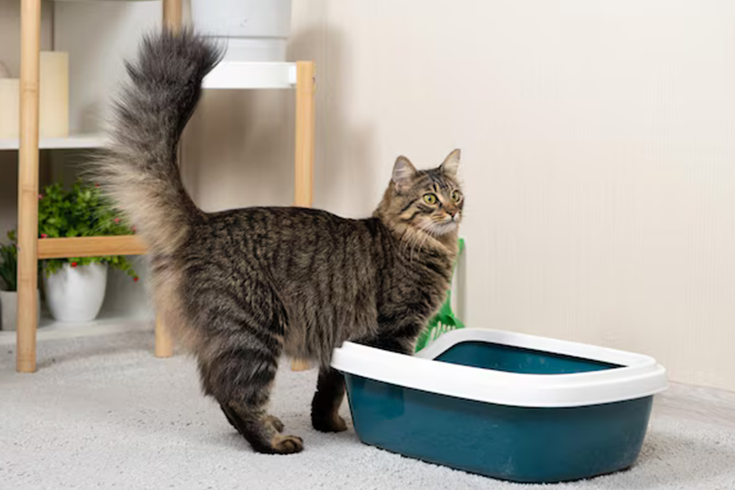
Cats are beautiful creatures with unique personalities and behavior. However, some cats have certain habits that not every cat has. For instance, you won’t want to discover that your cat pooping outside litter box. Accidents can happen occasionally, but it can be displeasing for the cat owner to see their pet’s inappropriate defecation. According to some research studies and reports, 10% of the cat population is habituated to pooping outside of the litterbox.
One or two times is okay, but if the issue persists and cat pooping happens on a regular basis, it can be a problem. Finding the correct issue quickly can help the owner direct their behaviour and train accordingly. If you are concerned about why my cat is pooping outside the litter box, there can be various underlying reasons.
Before this habit becomes a hard one to break, let’s get to know the reasons behind their unusual pooping outside the box and tips to train them.
Top 4 Major Reasons For Cats Pooping Outside Litter Box
Behind this sudden behavior of the cat defecating outside its allocated litter, there can be several medical, behavioral, and environmental issues that trigger it to shift its routine. Moreover, it can be due to the litter box itself, which results in a change in their preferences.
1. Medical Issues
Although cats are good at hiding their illness, a change in a cat’s toileting schedule indicates that they are suffering from any kind of medical condition. Some of the medical causes of litter box issues are explained below:

01out of 05Digestive Issues
What involves digestive issues is diarrhea, inflammatory bowel disease, and constipation in cats. These kinds of issues can cause pain or a sense of urgency that leads to a cat pooping just anywhere. In such sudden situations that can be overwhelming, they avoid the spot.
Here is why your cat throwing up undigested food.
02out of 05Arthritis
Senior or older cats with arthritis issues in their feet commonly suffer from pain or mobility issues, facing difficulty in climbing into the box. Due to mobility issues, squatting position is uncomfortable, and they find it easy to poop on the floor rather than using a litter.
03out of 05Urinary Tract Disease
Certain conditions, like Feline Idiopathic Cystitis (FIC), cause pain in cats. This medical condition also leads to an urgency in toileting. Some cats associate pain with the litter box because they find it difficult to defecate in the allocated spot.
04out of 05Diabetes/Kidney Problem
Cats sometimes face the condition of excess urine due to medical issues of diabetes and kidney disease. During such a condition, if the litter box is not cleaned and they find it dirty, they won’t find it appropriate for use and avoid it.
05out of 05Cognitive Dysfunction
It is another medical or mental condition that results in anxiety in cats. A cat will not find it comfortable to use the litter tray because it disrupts their mental health, and they forget where the litter box is or how to use it, so they poop in any area in your home.
2. Environment Change
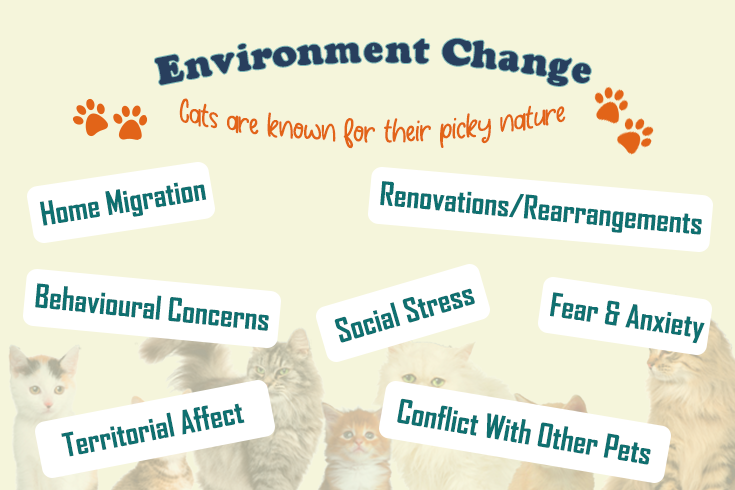
Cats are known for their picky nature, and hence, the slightest change in the environment causes them to avoid using the sandbox. Such situations are directly related to a change in living routine. Let’s get to know how environmental conditions affect the habit, which is why cat poops outside litter box.
01out of 03Home Migration
One of the major environmental triggers for a cat is the change of the existing house. Moving to a new home can make it difficult for a cat to adjust and get used to using the previous accessories. Make them feel comfortable and provide a hide and cozy spot, and place the familiar items to overcome this issue.
02out of 03Renovations/Rearrangements
Any kind of home revamp that is not minor can disrupt their routine due to Litter box aversion and a change in scent. Placing a sandbox in a quiet space can help them poop in ease without any stress. You can also try anti-anxiety medication after the vet’s consultation.
03out of 03New Family Members
Having a new member in a family can trigger them to behave unusually. It can be a new baby, pet, or person that makes them feel insecure, and routine disruption makes them stressed. Try introducing the cat to new members and help it adjust to your presence.
3. Behavioral Concerns
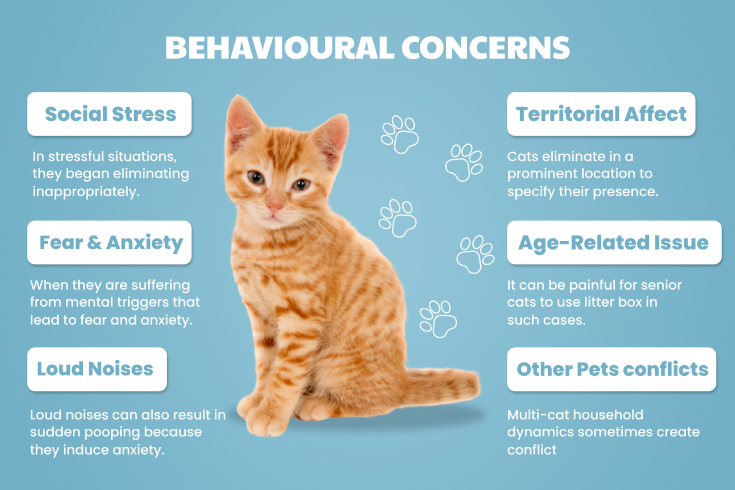
A cat pooping outside its box can be due to behavioral problems, such as anxiety, stress, and negative energy, which can cause it to poop elsewhere rather than in its allocated spot. These behavioural problems can be due to anxiety, stress, negative associations, competition with other pets, and litter box dissatisfaction.
01out of 06Social Stress
Social anxiety is another pinpoint that results in a change in their consistent behaviour. In stressful situations, they began eliminating inappropriately. This feline stress behavior arises when there is the addition of a new family member or a new pet in competition.
02out of 06Fear & Anxiety
Cat elimination patterns are disturbed when they are suffering from mental triggers that lead to fear and anxiety. When something out of the box happens suddenly, it triggers anxiety, and they start defecating elsewhere. This anxiety-related pooping can be solved by minimizing stressors.
03out of 06Territorial Affect
It is basically a behaviour known as middening in which they try communicating with other pets. Cats eliminate in a prominent location to specify their presence. These territorial markings are often found in feral cats, which is the result of some environmental changes.
04out of 06Age-Related Issue
Age is one of many cat behavior problems that make a cat poop outside the litter box due to certain conditions like cognitive dysfunction, arthritis, diabetes, kidney disease, bowel habit, injury, and mobility issues. It can be painful for senior cats to use litter box in such cases.
05out of 06Loud Noises
Loud noises can also result in sudden pooping because they induce anxiety. Cats associate these noises with negative experiences, and their stress response is to defecate anywhere in the home. Try to get the signals and reduce the things that stress them out.
06out of 06Conflict With Other Pets
Things like stress, anxiety, and competition are common in a home with multiple pets. Multi-cat household dynamics sometimes create conflict and trigger a defensive situation. Try analyzing all pets and separate the one causing the issues. Provide your pets with more resources so that they don’t feel competitive with other cats.
4. Litter Box Problems
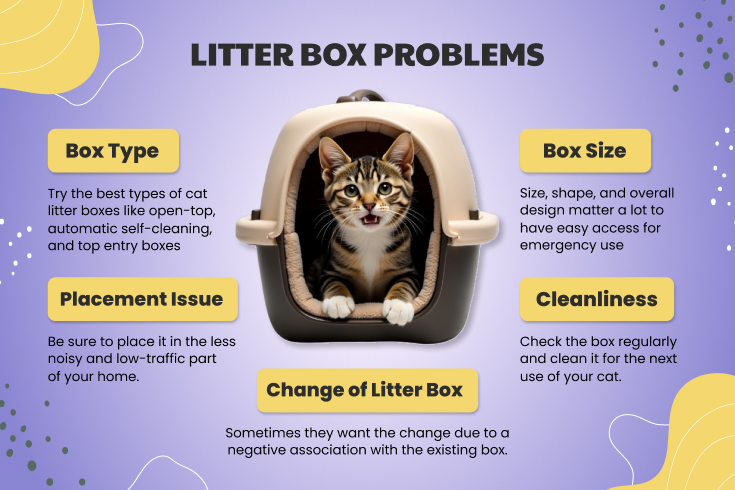
Do you find your cat pooping on carpet frequently and have tried everything but failed? The issue is sometimes not physical, environmental, or medical rather with the litter tray itself. Cats can have issues with their defecating box if it doesn’t meet their standards. No matter how much you’ve trained them to use the box, they’ll reject using it due to a dirty box. Here you’ll find the reasons associated with the pooping box.
01out of 05Box Type
Cats won’t find it comfortable to use boxes that are too high or too small. Select the box that is easily accessible for use when they are in need or there’s an emergency. Try the best types of cat litter boxes like open-top, automatic self-cleaning, and top entry boxes for litter and odor control. Based on your budget, you can invest in multifunctional options.
02out of 05Box Size
For cats, large boxes with plenty of space are recommended. The large litter boxes are convenient to use and make it easy to dig. Size, shape, and overall design matter a lot to have easy access for emergency use by one or more cats.
03out of 05Placement Issue
The next thing that matters is the location of the box. If you place it near a door or an area that gets a lot of traffic, cats won’t feel at ease using it. It will be more confusing for cats with dementia. Be sure to place it in the less noisy and low-traffic part of your home.
04out of 05Change of Litter Box
Replacement is one of the main litter box problems in cats. Sometimes they want the change due to a negative association with the existing box. But mostly they don’t like it when the litter box is suddenly changed, as they need time to get used to the new one.
05out of 05Cleanliness
Cats often avoid their box when it is dirty and smelly and not up to their standards. Ensure litter box cleanliness because cats have a better sense of smell, and they avoid soiled areas. Check the box regularly and clean it for the next use of your cat.
How To Stop a Cat from Pooping on the Floor?
Now that you understand the possible reasons why they are not using the allocated tray for defecating, your next concern might be: how to train a cat to poop outside. After your vet has ruled out any kind of health concerns, follow these instructions and tips for stopping a cat to poop outside.
01out of 06Clean Litter Box
Cleaning and maintenance is the first and foremost step that must be followed. Scoop up the litter box daily at least once and thoroughly clean it weekly at least twice. For cleaning, use a mild, enzyme-based cleanser and let it dry completely. Pour in the fresh litter using hand gloves and use a face mask to avoid any bugs or litter dust.
02out of 06Change Litter Material
When you are changing cat litter material, make sure it is soft and unscented because some cats won’t like the scent. You can try different types of litter to figure out what your cat prefers. Make sure the litter is not wet or stinky because cats might choose to poop elsewhere.
03out of 06Focus on Placement
If you notice your cat is pooping elsewhere in a particular area that can be a bath mat or any surface, try blocking the access immediately using a baby lock door. Never punish and use positive behaviour to direct them to use their box. The initial box placement for cat poop training must be a quiet and private zone.
04out of 06Use Additional Box
For homes having multiple pets, it is advised to keep an additional litter box. Sometimes multiple cat make one litter box their favorite and access it at defecating time. You can add one additional box of their favorite choice to avoid any conflicts and competitive behavior.
05out of 06Try Being Creative
Once you’ve chosen the right litter, stick with it and spread the litter boxes throughout your home. Keep the bathroom and kitchen separate so that cats don’t feel relieved to eat or pee just anywhere. Block their access to frequently eliminating places. Spray a kitten safe deterrent to make these areas undesirable for them.
06out of 06Stay Consistent & Positive
It is important to stick with the cleaning routine so they feel the urge to go somewhere else. Also, never punish them but reward them with their favorite treat when they are being appropriate with the use of the litter box. It will encourage them and they will gradually stick to using it routinely.
Final Thoughts
A cat defecating outside litter box can be due to several medical, physical, environmental, and behavioural issues. Aside from these reasons, your cat can have issues with the litter box as well. To address medical concerns and litter training regression in cats, contact a veterinarian. We’ve mentioned all the possibilities for a small or elderly cat pooping outside litter box. A disturbed cat bowel routine, social stress, and sudden change of place and environment highly impact on their behaviour. When the condition worsens, make sure to book an immediate visit to a veterinarian to get good guidance to direct their behaviour positively and treat their medical concerns.