
Can Dogs See in the Dark?
Concerned dog owners wonder if their pooches can see well at night or in any dark place. Dogs’ and human eyes are found to be very similar both functionally and anatomically. Though puppies and dogs have a great vision compared to human beings. When leaving your home with your dog in the evening, you might question yourself whether or not your dog will be able to walk like humans, or if it is safe to take them outside in the evening.
It is presumed that they see the world just like humans, but in fact, their vision varies from humans. In this case, you’ll probably want to know about the canine eye structure to understand them better in terms of their eye vision. We are here to put your mind at ease so that you can comfortably leave your house with your puppies and feel safe!
Dog Eye Anatomy
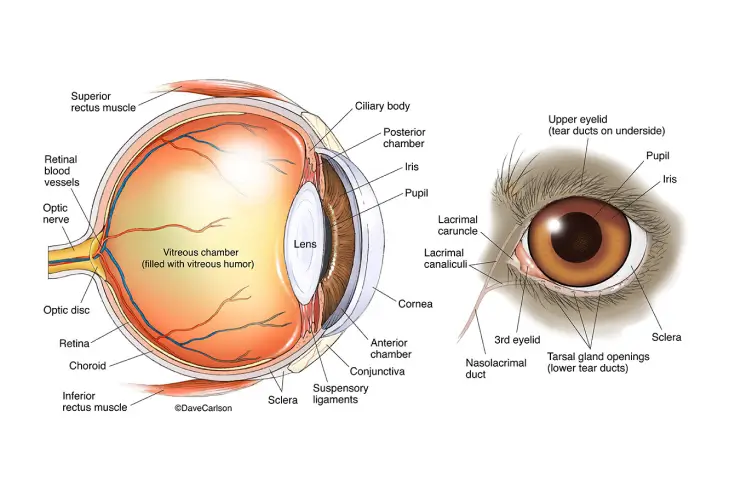
Talking about dog eye structure, it is made up of the pupil, lens, inner retina, middle iris, and outer cornea. The cornea is basically a transparent shield that focuses and reflects light through the pupil to the lens. Also, light is converted into electrical signals on the retina and sent to the brain via the optic nerve. The retina has specialized photoreceptor cells called cones and rods that enable it to convert light into nerve signals.
These nerve signals are fully responsible for vision. Rods help detect shapes and motion, and function better in dim light. While cons work better in bright light, they have greater color-detecting sensitivity, ensuring clarity and sharpness. Now that you know how well can dogs see at night, via dog night vision explained.
Do Dogs Have A Night Vision?
Perhaps you’ve even asked, “Do all dogs have great vision? Dogs do have night vision, and they can see far better than humans in the dark. But their vision varies from one breed to another. There’s a lot more to add and discuss about how dogs see and interpret the world and their surroundings. Dogs, even with great vision, cannot see things like humans can while wearing night vision goggles. But normally, where humans struggle to watch, they are highly effective trackers and hunters, even in the dim light.
01out of 05Can Dogs See In The Dark Better Than Humans? Dog Vision vs Human Vision
Anatomically speaking, the eyes of dogs are just like ours. Due to their large pupil, Tapetum Lucidum, and rod-dominated retina, their eyes are just adapted for low light. The strong adaptation allows them to see well in low-light, ensuring enhanced vision, better motion detection, and color and clarity. You probably have noticed them catching and chasing things during any kind of play, like hide and seek, jumping, and or any physical activity.
02out of 05Do Dogs Need a Light on at Night? | Day vs Night Eyesight
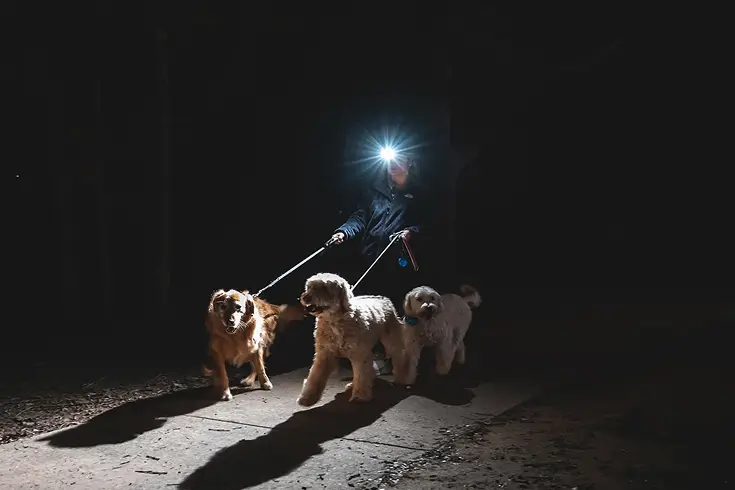
Dogs and puppies don’t need a light on at night because dogs in low light environments feel better for their sleep quality and overall health. To get a refreshing and peaceful sleep, keep the lights dim at night because it will help preserve their natural circadian rhythm. A small light can be used for needed vision and a calming effect if they look anxious, for perfectly navigating in the dark. Darkness promotes melatonin production, which is a relaxing hormone to helps your dog fall asleep more quickly and naturally.
03out of 05Can Dogs See Better Than Cats At Night? | Dog Sensory Abilities
Can dogs see in the dark like cats? When it comes to nocturnal vision, cats are even better than dogs. Tapetum lucidum in dogs is less efficient than in cats. Cats detect more light in dim conditions while having better vision during dawn and dusk. For any kind of crepuscular activity, you can trust your cat’s vision more than a dog’s. That’s because cats have a vertical-slit pupil that ensures more light reflection while protecting the retina in a bright light.
04out of 05Can Dogs See Glow In The Dark Objects? | Evolution of Dog Vision
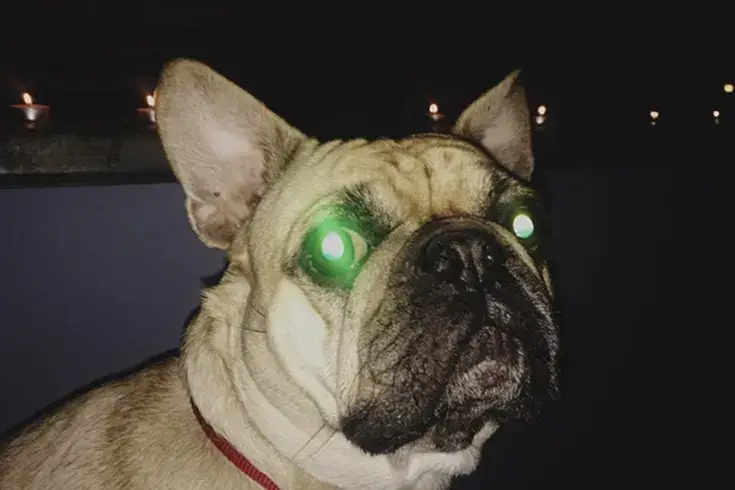
Now that you know whether can dogs see well in the dark or not, let’s talk about why dogs’ eyes glow at night. Dogs depth perception about their eyes’ glow can be analyzed during nighttime. Observe nighttime behavior in dogs because they see glow-in-the-dark objects like toys, balls, and other home accessories. For dogs seeing in dim light, phosphorescence can have a different color based on their wavelength. This phenomenon can vary among light-sensitive dog breeds, but they still see glow in the dark objects.
05out of 05What Helps A Dog See At Night?
The specialized eye structure and reflective eyes in dogs help them see at night. Canines and motion detection have been the best ever since because they are good at detecting things through tapetum lucidum. Besides knowing can dog see in the dark, you can also understand what color dogs can see because, at this point, their ability in darkness is limited. However, the colors they can detect in darkness are blue, gray, and yellow.
Wrapping Note
How do dogs eyes work? Can puppies see in the dark? Are dogs able to see colors? Being a dog or puppy owner, if you are concerned about whether or not your dog’s eyesight works perfectly at night, this guide covers all the aspects relevant to canine eye structure and their ability to see at night. Even you’ll understand if their vision is better than humans’ or cats, so that you can take them on a stroll at night and roam around safely. However, when it comes to your concern about what colors can dogs see in the dark, there’s a limitation. Know more about how far dogs can see and don’t believe anything about dog vision myths.