Cornish Rex Cat Breed Guide
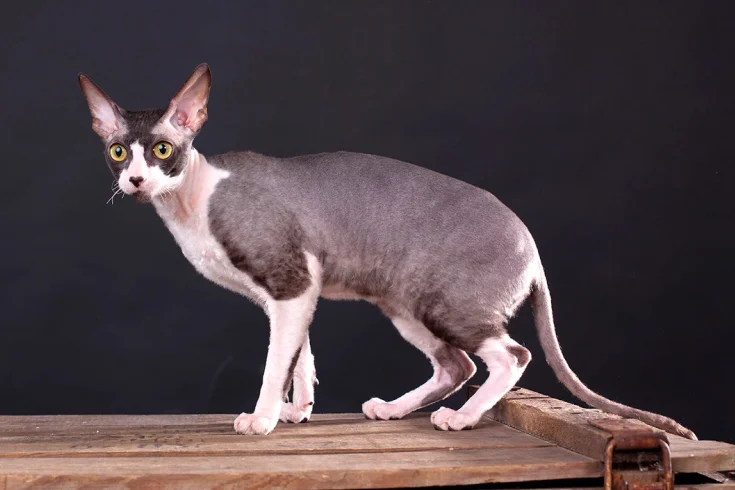
With a strikingly beautiful personality, Cornish Rex easily turns heads, featuring an angular face, wavy coats, athletic build, and high cheekbones. No wonder it stands out among other cat breeds due to its distinctive appearance, also achieved the title of “greyhound” in the cat world. With a reputation for being sociable, playful, Rex mutation genetics, and lively members of the family, they are among the most popular cat breeds in the United States.
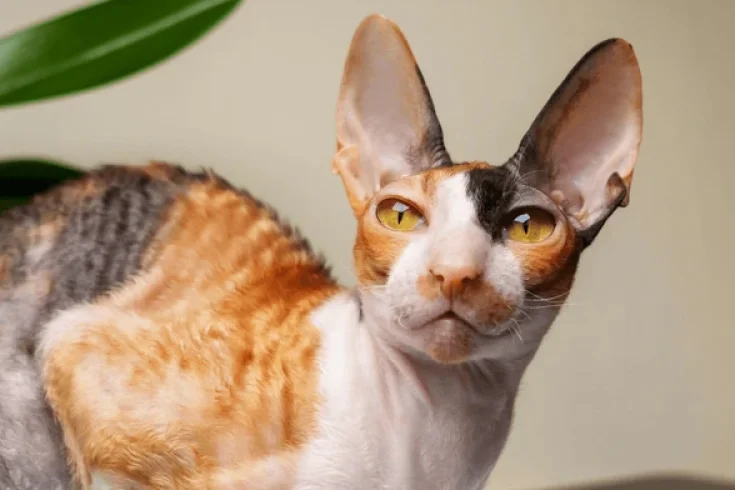
Amazingly, this breed has the features that make it stand out among other curly haired cat breeds. If you are among those individuals who want to make these unique felines your pet, you must know about their origin, history, specifications, health conditions, and more. Moreover, you must be aware of the nutritional requirements, diet and nutrition, grooming and care, and training needs.
Let’s find out more about the individuality of this breed through some characteristics and features, besides, cornish rex images!
Breed Overview
Before deciding to have this breed, familiarize yourself with the necessary information, including features and characteristics. It helps cat owners have a better understanding of what they are investing in.
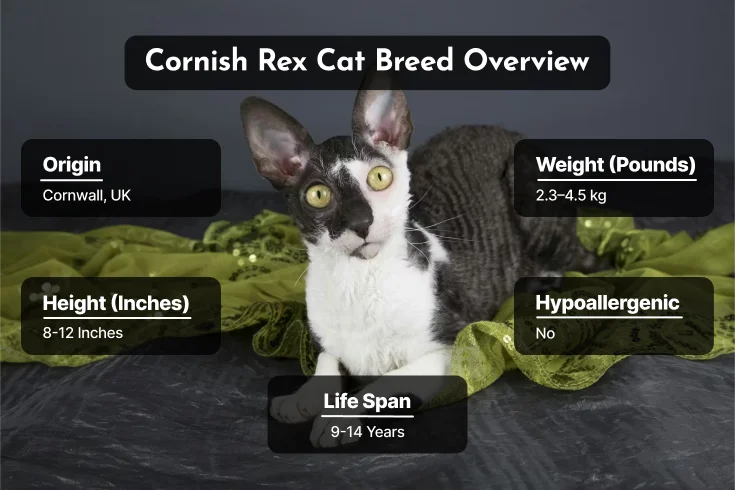
01out of 03Cornish Rex Cat Breed Overview
| Features/ Characteristics | Specifications |
| Origin | Origin Cornwall, UK |
| Group | Small to medium-sized shorthair cats |
| Weight (Pounds) | 2.3–4.5 kg |
| Height (Inches) | 8-12 Inches |
| Personality/Physical Characteristics | Fine downy coat and delicate bone structure, high-standing appearance, slender, long, flexible tail, and high legs |
| Temperament/ Behaviour | Intelligent, playful, energetic, affectionate, enjoys interaction, and has a clownish sense of humor |
| Energy Level | High, athletic, and active |
| Coat and Color | Short, extremely soft, and silky coat just like a rex rabbit. Colors and patterns vary, including blue, cream, red, black, and more |
| Hypoallergenic | No |
| Life Span | 9-14 Years |
02out of 03Pros of Cornish Rex
- Beautiful, distinctive, and unusual curly coats.
- Affectionate, sociable, playful, and intelligent personality.
- Lively, energetic, healthy, and athletic build.
- Has low shedding coat, good for people allergic to cats.
- Require minimal grooming, hence, easy to maintain and care for.
- Great as a family pet, and gets along well with other pets.
03out of 03Cons of Cornish Rex
- Needy and demanding of attention, temperature sensitive.
- May be prone to a genetic skin, eye, and coat disorder.
- A large appetite may lead to obesity if overfed.
- With a fragile build, they had separation anxiety.
Cat Breed History & Origin
The story of the Cornish Rex begins not with a plan, but with a genetic mutation in 1950s Cornwall, England. From an ordinary British Shorthair mother came Kallibunker, a kitten with a revolutionary, tightly waved coat and a sleek, long limbed physique that immediately turned heads. Recognizing this unique mutation, owner Nina Ennismore took a daring step: she bred Kallibunker back to his mother to secure the distinctive recessive gene.
These curly haired early forerunners were soon crossbred with Siamese, Burmese, and others to strengthen their line. In a move that proved critical, a pair arrived in the United States in 1957, just as the founding line faced extinction in England. American resilience through further crossbreeding with breeds like the Havana Brown preserved the future of the breed. Today, the Cornish Rex is a celebrated favorite, officially recognized in 1964, prized for its signature velvet-soft appearance, sociable nature, and playful charm. For more breed recognition details, see the CFA Official Cornish Rex Profile
Cornish Rex Cat Characteristics
Often mistaken for an aloof breed due to their fine, sleek, and graceful profile, long-legged appearance, the Cornish Rex is in fact a perpetual kitten. When it comes to the Cornish Rex characteristics, they have an easygoing and social temperament, thriving on inclusion in all family activities. No matter whether the family is ready for an interactive play session or just some quiet time, this breed always reciprocates the energy. Their affectionate nature makes them ideal snugglers, a tendency encouraged by the irresistible, plush softness of their signature curly coat.
Adding to the Cornish Rex personality and charm is their notable adaptability, which allows the Cornish Rex to thrive in diverse home environments and even excel as therapy animals. Their rich Siamese ancestry is often reflects in their vocal nature, as some members of the breed are quite talkative. Highly valued for their blend of sophisticated looks and clownish, affectionate antics, they are considered devoted, engaging companions well beyond their first year of life.
| Characteristics | Specifications |
| Affection Level | High |
| Kid-Friendly | High |
| Pet-Friendly | High |
| Exercise Needs | High |
| Playfulness | High |
| Energy Level | High |
| Intelligence | High |
| Vocalizing Tendency | Medium |
| Shedding Amount | Low |
| Trainability | High |
Color and Coat
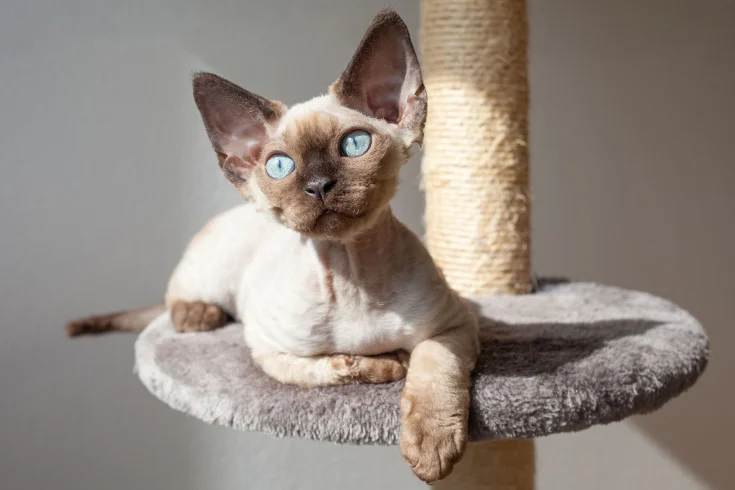
Talking about their wavy, short, and soft coat, they come in every imaginable pattern and color. Like Devon Rex, their coat also lacks guard hairs and consists of only an undercoat. Coat waves vary in size and depth and are described as plush velvet. Some popular Cornish Rex colors for coat are white, black, blue, red, cream, chocolate, lavender, silver, and smoke.
You may also find cat coat color variations in some other regions, requiring coat texture explanation. While the patterns are calico, bicolor, tabby, tortoiseshell, and pointed. Although this breed lacks protective guard hairs, found in most cats, they shows a unique, velvety, and suede-like texture. However, their coat color can be virtually any color and pattern, as recognized in cats.
Temperament & Nature
It won’t be wrong to say that Cornish Rex hypoallergenic cats are a bundle of energy, and they do well in a multi-pet household. You don’t have to worry about indoor cat activity needs, because they have impressive jumping abilities due to their powerful legs, reaching high spots easily. When it comes to having these social cat breeds, consider providing them with tall shelvings, perches, cat towers, cat-proof drawers, and cupboards.
They love height so consider giving them cat trees and shelving for climbing.
These felines are curious and excited about strangers and love meeting new people. Sometimes, when the door bell rings, they love to go and check who is there out of curiosity. It is said that they show dog like cat behavior. Although they are fine with independent playtime, but also love to play with their human companions. Cornish Rex kittens and cats are the best choice for those who love to spend time with their pets.
Grooming and Care
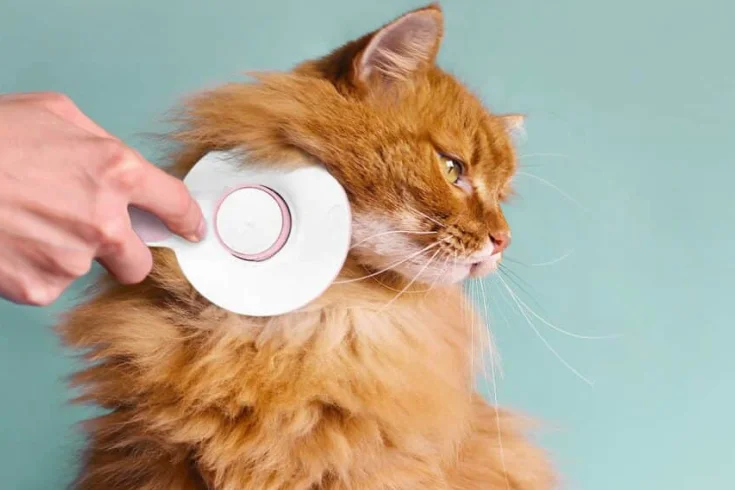
Curly rex cat coat is the most noticeable feature that ultimately needs proper care. After going through our Cornish Rex grooming tips, you can begin curly kitten care by gentle cat brushing for any entangled hairs while avoiding damage. Although they shed minimally and have a lack of guard hairs, their coat becomes oily around the paws and chin.
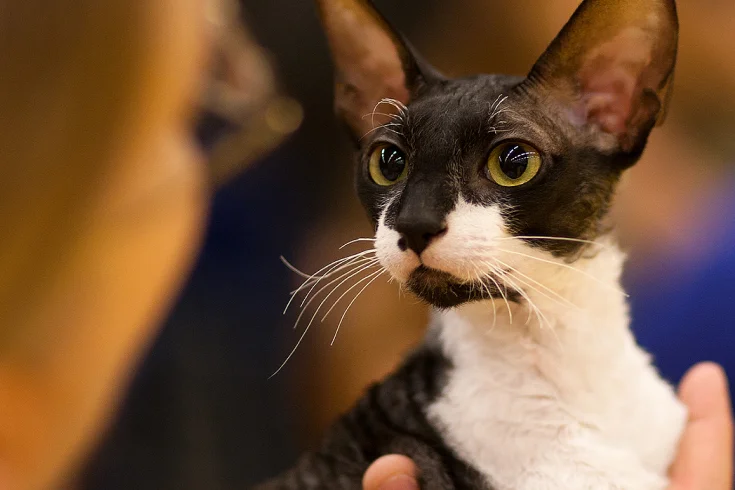
To treat oily skin and coat conditioning for cats, maintain proper cat bathing frequency to eliminate the greasy touch, reduce feline dander levels, and avoid cat skin sensitivity. Besides that, trim claws, check their ears, wipe their eyes, and brush their teeth as part of eye, ear, and dental care for cats. Moreover, it is better if you read veterinary coat care advice to keep your cat indoors with adequate heating or air conditioning for the happiest and healthiest life.
Training and Exercise
This fine downy coat, low shedding cat, with a lack of guard hairs, loves to interact, explore, and play. Faux mice, feather toys, treat puzzles, and cat condo towers are some things they love to play with. Even when they don’t play with toys, make sure they are occupied with kids and other pets for playing around. What’s amazing about this curly coated cat is that they can be taught to do tricks like simple sitting, shaking, waving, and fetching.

These highly intelligent and allergy friendly cats with a knack for independent problem solving, can be engaged with several activities for training and exercise. That’s because they show a quick response to positive reinforcement and training techniques. Some activities to get them trained are clicker training, solving puzzle feeders, lounging in a sunny spot, climbing to a high perch, foraging for treats around the house and in snuffle mats, bird watching from a window, and cuddling with their humans or other pets.
Some Common Health Concerns
Cornish Rex has the crossbreeding benefit with numerous other cats like British shorthair, American shorthair, Siamese, Havana brown breeds, and Burmese. That’s the reason why they live longer and a healthy life. Most are reported to live into their teens, while some surpass 20 years based on their genetic conditions and health. Although it is not susceptible to many diseases and disorders found in other purebred cats, due to the most common Cornish Rex health issues, it is necessary to find out how to reduce cat allergies and genetic conditions.
01out of 03Progressive Retinal Atrophy (PRA)
Progressive retinal atrophy is essentially a vision condition that affects a few cat breeds, including the Cornish Rex. It is a severe condition that causes retina deterioration, ultimately leading to blindness over time. Night blindness typically appears in cats around 3-5 years of age. Unfortunately, there’s no cure, but cats can move around happily with some extra help. Moreover, the PRA carriers must not be bred.
02out of 03Congenital Hypotrichosis
It is another genetic disorder that causes fur thinning along the head and torso. It might even lead to baldness in these areas. Although this condition is not painful, but requires skin care to prevent sunburn or dryness issues. You can opt for veterinary care for rex cats, but there’s no cure for this genetic condition, and cats with this issue must not be bred.
03out of 03Hypertrophic Cardiomyopathy (HCM)
HCM is a common heart condition in cats that affects the heart’s left ventricle. It makes the heart walls thick and impacts the ability to pump blood. You can get heart screening cats for diagnosis. Less commonly, it is caused due to hormonal imbalances, high blood pressure, and cancer. Its symptoms often include Weight loss, difficulty breathing, lethargy, loss of appetite, coughing, and pale gums. Early detection of HCM and its management are significantly important in improving the cat’s lifespan.
Diet and Nutrition
The highly active Cornish Rex typically possesses a very high appetite that demands attention. With their high energy level, they need constant access to food; however, owners must resist this temptation. These cats are eating lovers and, if allowed to eat to their desire, they gain excess weight. For this reason, a carefully scheduled meal plan is the simplest and most effective strategy for managing their weight and ensuring they maintain their unique physique, rather than free-feeding.
For more food and healthy tips see our guide to healthy food for cats and explore canned food options for hydration support
In addition to a balanced, high-quality commercial cat food, the Cornish Rex welcomes variety in their diet. For a healthy snack or mealtime diet, consult your veterinarian about adding only the approved fruits and vegetables. This practice can provide beneficial supplementation and add welcoming enrichment, satisfying the breed’s eagerness for food without compromising their health and nutrition for a healthy coat.
Where to Adopt and Buy Cornish Rex Cats?
Cornish Rex can be the choice of many homeowners due to their playful, intelligent, and affectionate nature. Moreover, their low grooming needs and social companionship make them a plus point for their owners. Before you get to know if the Cornish rex is the right cat for you, know about the cost of having it. Cornish Rex costs range from $800 to $1200 on average.
When it comes to having them as a pet, there are a lot of quality Cornish Rex cat breeders, rescue groups, and even breed interest clubs that provide deep insights about this breed. They even tell about the tips and funny stories about these comedic creatures. Due to their unique appearance and traits, there are rare chances of them ending up in shelters. Often, they are rehomed through ethical cat breeders networks.
Life Expectancy
The Cornish Rex lifespan is typically 9-14 Years with excellent care. However, with excellent care, it can reach anywhere between 16-20 years. Besides proper care, it’s all about good diet, genetics, and environment, contributing to the longer cat breeds lifespan.
In a Nutshell
With fine bone, slender profile, and athletic build, the Cornish Rex has a distinctive appearance, featuring a soft, short curly fur coat. Talking about their undercoat (down hair), lack of guard hairs. Speaking of their personality, they are highly active, intelligent, and highly affectionate, known for their soft, distinctive, and playful dog-like character. This breed is people-oriented and loves human interaction. In this comprehensive cat adoption checklist, you’ll discover a lot about this breed that you must know before having them as a pet, like nutritional needs, characteristics, lifespan, training, possible health problems, kitten socialization tips, the difference between Devon Rex vs Cornish Rex, or if are Cornish Rex cats hypoallergenic?. For those who love to have one of a kind breeds, this cat has with distinctive appearance and traits.