Devon Rex Cat: Complete Breed Guide to Personality, Care & Health
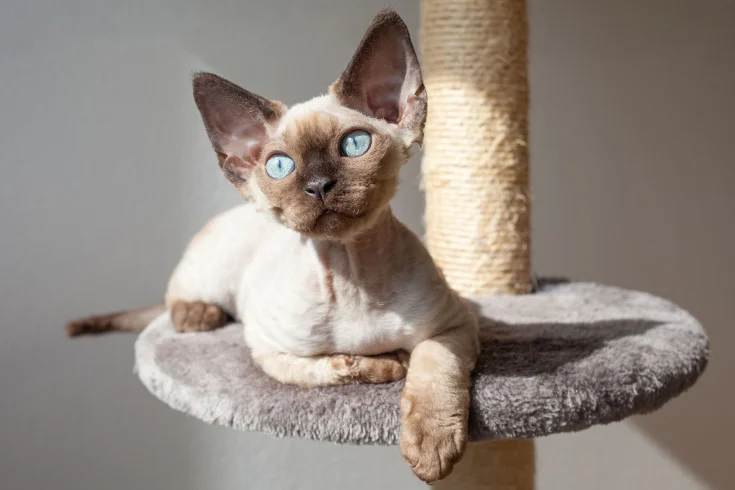
Nicknamed, Poodle cats, because of their curly coat and hair, Devon Rex appear unique. They have thin, short, and wavy hair coats and are renowned because of their oversized ears and elfin appearance. They came into existence due to a spontaneous genetic mutation in England in the 1960s. This breed developed a fan base not only due to its charming personality but also due to its friendly interaction.
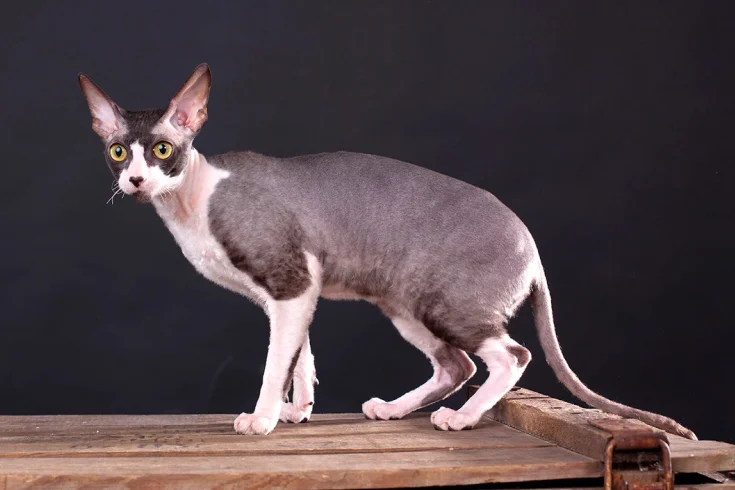
Belonging to the Rex cat breed family, with other curly haired cat breeds like Cornish Rex or Selkirk Rex, these breeds are entirely different in terms of their appearance and traits. While every rex breed differs, Devon Rex stands out among all rex breeds because of their flaunting worthy features. If you are planning to have this breed as a pet, you’ll need to learn more about the Devon Rex.
Here, we’ll be discussing the breed’s history, temperament, care, training, nutritional needs, and more about this Pixie cat!
Breed Overview
Before deciding to have this breed, familiarize yourself with the necessary information, including features, characteristics, life expectancy, and more. It helps cat owners have a better understanding of what they are getting.
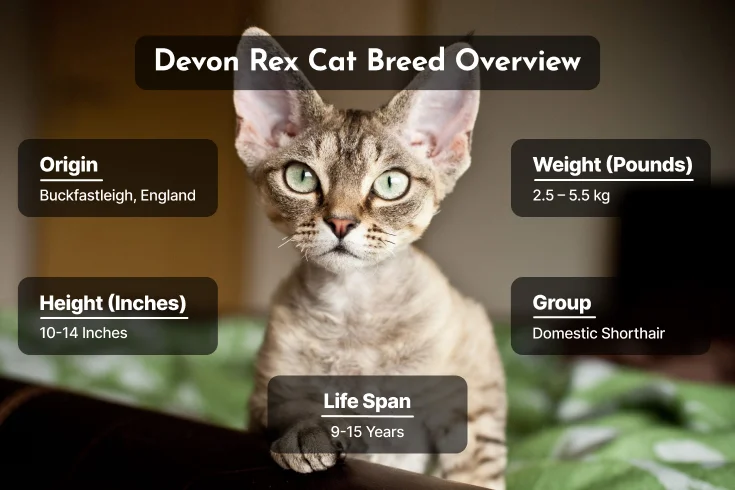
01out of 03Devon Rex Cat Breed Overview
| Features/ Characteristics | Specifications |
| Origin | Buckfastleigh, England |
| Group | Domestic Shorthair |
| Weight (Pounds) | 2.5 – 5.5 kg |
| Height (Inches) | 10-14 Inches |
| Personality/Physical Characteristics | Pixie like look, high cheekbones, slender, Large eyes and ears, muscular body, triangular head, broad chest, and short muzzle |
| Temperament/ Behaviour | Curious, social, energetic, playful, and affectionate, love to jump |
| Energy Level | High, Needs Stimulation |
| Coat and Color | Short, curly, wavy, and soft coat having different calico, tabby, solid, and more |
| Hypoallergenic | Yes |
| Life Span | 9-15 Years |
02out of 03Pros of Devon Rex
- Affectionate and social, they make close bonds with owners easily.
- Playful and energetic, they love to entertain with their antics.
- Intelligent and trainable, they respond to commands and interactive play.
- Good with children and tolerant of other pets like dogs
- They are low shedding, hence, good for people with mild allergies.
- No need for excess grooming, mild brushing, and gentle wiping is enough.
03out of 03Cons of Devon Rex
- Genetic conditions, like prone to several health issues.
- Suffer from hip dysplasia, patellar luxation, and reduced mobility.
- Thin coat is not hypoallergenic and can be prone to hypotrichosis issues.
- Can be susceptible to digestive, dental, diabetes, kidney, and ulcer conditions.
Cat Breed History & Origin
Devon Rex originated in 1960 in England, and a woman named Beryl Cox discovered a curly-coated kitten named Kirlee. The cat found by a woman near an old mine gave birth to multiple kittens, and one of them had a curly coat.. Breeding trials were made for Devon and Cornish, but the results revealed that Kirlee’s genes have a unique wavy coat.
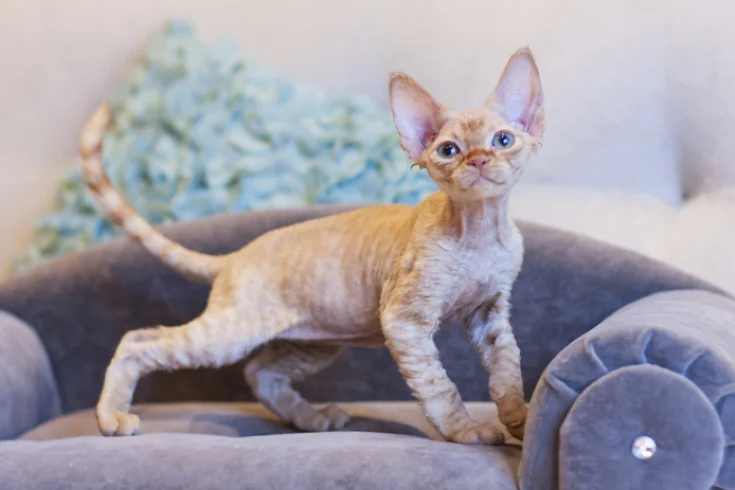
Due to a different genetic mutation, it was later determined that it has a wavy coat, setting them apart as a distinct breed. Then, Kirlee was identified as the foundation for the Devon Rex breed. Later, this breed first came to the United States in 1968, getting official recognition from the Cat Fanciers Association (CFA) in the 1970s. This breed is often jokingly referred to as a mix of dog, monkey, and cat because of their lively, curious, and highly social nature.
Devon Rex Cat Characteristics
Characteristics of each breed are what set them apart from other breeds. Based on the individual needs and preferences, it is difficult to find compatible personality traits. Generally, Devon Rex has a short-haired coat, a slender frame, large ears, oval shaped eyes, cheekbones, a short muzzle, and an “impish” face. Besides facial and body features, we’ve unveiled some characteristics for your ease in adopting them as a pet.
| Characteristics | Specifications |
| Affection Level | High |
| Kid-Friendly | High |
| Pet-Friendly | Low |
| Exercise Needs | High |
| Playfulness | High |
| Energy Level | High |
| Intelligence | High |
| Vocalizing Tendency | Medium |
| Shedding Amount | Medium |
| Trainability | Medium |
Color and Coat
Talking about their coat and color, they have a very unique and rare coat among all rex breeds. Coat is fine, short, thin, and curly, which appears like suede and down. It forms the delicate, distinctive, and loose wave or curl that sheds less compared to other breeds. As they don’t have long guard hairs, their skin appears greasy and requires gentle bathing to ensure hygiene and cleanliness.
Then comes the coat hues that can be in almost any color or pattern. Solid colors are black, blue, white, red, cream, white, chocolate, lavender, and cinnamon. Some bi-colors are in combination with white. Classic, spotted, ticked, and mackerel are the four recognized tabby patterns. Other patterns are shaded, smoke, chinchilla, and tortoiseshell. Moreover, eye color variations are copper, aqua, amber, and green to gold.
Devon Rex Cat Temperament & Nature
Described as poodle-like and having happy go lucky nature, this rare breed is known for its intelligence, affection, and playful nature. They are even described as having a dog like personality because of their sociable and attention seeking nature. They love to play games like fetching and like interactive toys. Though they are energetic, they like it when you cuddle with them after a play session.
Additionally, they are friendly with other pets and children, as they are sociable even with strangers when properly socialized. Aside from that, Devon Rex is quite vocal and communicates through meows, purrs, and chirps. Talking about their active nature, they like the idea of turning any home object into a toy, keeping humans on heels. They like interaction, but make sure to give proper time needed for introductions.
For professional insights on cat behavior and socialization, you can check ASPCA’s pet behavior resources.
Grooming and Care
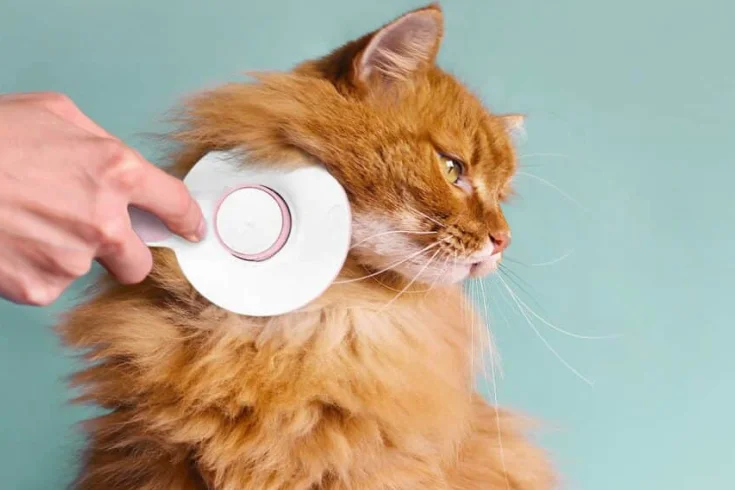
The wavy fur of Devon Rex cats has fine hairs that lack guard hairs (the top protective coat hair layer). It causes their skin to become greasy more easily, and they need to bathe occasionally to prevent oil buildup and keep their skin healthy. Moreover, they shed, but not as much as other breeds. To remove the loose fuzz, simply gently rubbing with a damp cloth is often sufficient. Due to low shedding, they produce lower levels of Fel D1 proteins, hence, good for people who are cat allergic.
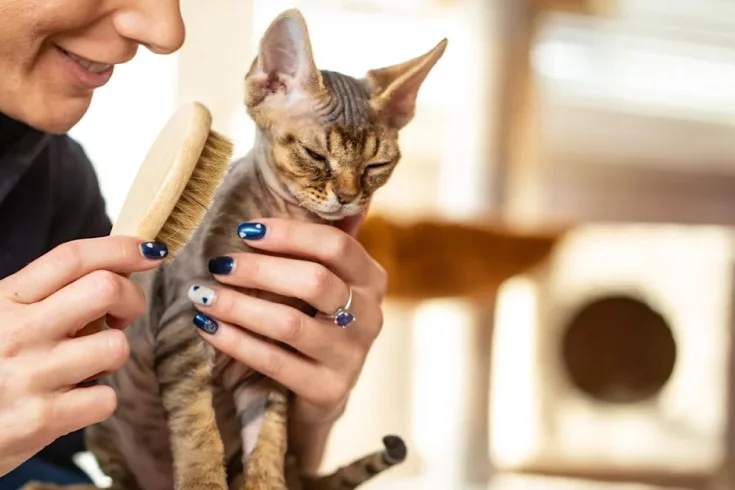
As far as the cat care is concerned, to remove the dead hairs, use rubber brushes, but do it gently, as it can permanently damage their hair. Their skin can be kept healthy by bathing with cat-safe shampoo. Their loose, wavy fur needs gentle grooming sessions. Besides, routinely check their eyes for clear view and ears for unusual discharge or odors, and see a veterinarian if needed. Other than this, regular vaccination, parasite control, and annual veterinary cat health checks are beneficial for their health.
Want peace of mind about future medical costs? Check out our guide to cat health insurance for better protection.
Training and Exercise
Caring for a cat is crucial, but the breed does have some specific requirements when it comes to attention, activity, and grooming. Devon Rex has a high energy personality, and their happy go lucky nature makes them very eager to learn. A surprising fact is that Kirlee (original cat) could fetch toys and walk on a tightrope, proving itself as a natural performer.
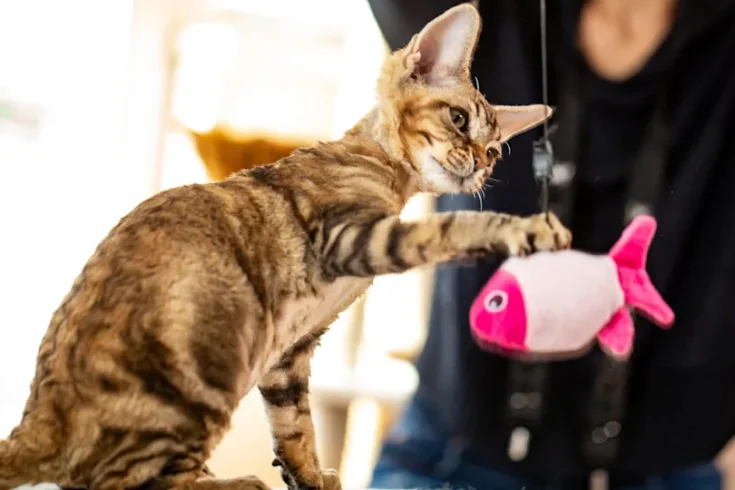
While keeping this breed indoors, provide an array of activities like leaping, puzzle feeders, wand toys, fetching, exploring, climbing, and interactive games, ensuring both mental and physical stimulation. With a striking appearance, it can be a target for thieves and face outdoor risks like disease, predators, and traffic. Make sure to have a secure catio setup for their safety and avoid theft risks.
Some Common Health Concerns
Typically, it is considered a healthy breed that enjoys the best lifetime of 9-15 years. Despite their good health, it is a good idea to consider cat health insurance companies and compare cat health insurance costs. Like other breeds, this one is also prone to some health conditions, which are mentioned down.
01out of 04Hypertrophic Cardiomyopathy (HCM)
It is the most common heart disease found in this breed. For HCM, breeding cats can be screened with echocardiograms. Therefore, when it comes to buying from breeders, ask for the genetic test results.
02out of 04Polycystic Kidney Disease (PKD)
It is a hereditary condition that forms cysts in the kidneys, resulting in kidney failure. This disease can also be detected via genetic testing. So, responsible breeders must provide the test outcomes to the buyers.
03out of 04Luxating Patella
When the kneecap slips out of place in cats, it causes mobility issues and pain. This condition leads to inflammation and early arthritis. It can be managed by a healthy diet, weight management, and pain relief therapies. In severe cases, the condition may need surgery.
04out of 04Hip Dysplasia
Hip dysplasia happens due to the malformation of the hip joint that can lead to arthritis, reduced mobility, and severe pain. A change in their physical activity, like avoiding stairs, limping, and not squatting in their litter box, is a sign of hip dysplasia.
Diet and Nutrition
This Pixie cat doesn’t have any special dietary needs other than typical healthy cat. But to keep this low maintenance cat healthy, they do need a high protein diet. The best, healthiest, and highest-protein diet in their food is a meat-based diet. Must consider their current life stage and health condition to provide specifically formulated food for all life stages.
To ensure you’re choosing the right meals for long-term wellbeing, explore our guide on healthy food for cats for high-protein, meat-first options that support a shiny coat and strong muscles.
Also, keep track when they need to switch food from 1 year old to adults. As your cat approaches senior age, like 7-12 years, keep proper care of their diet. Opt for portion control for their diet to prevent weight gain. Make fresh water available at all times. Feed them properly measured meals at regular intervals. Give 3-4 meals per day to kittens and two meals a day to adults, morning and evening. A moisture rich diet also supports skin and coat health, so you may consider adding high quality canned cat food to their weekly nutrition
Where to Adopt and Buy Devon Rex Cats?
Due to their unique appearance and relatively low maintenance and grooming needs, people love to have this breed in their homes. Devon Rex is a quite rare breed that is unlikely to be found at a rescue or shelter. The best way to buy and adopt this breed is by getting in touch with a reputable breeder. Check out all the trusted or reputable sources to find the compatible choice in terms of appearance and health conditions. When buying, prioritize health and temperament.
Moreover, trust the breeders who:
- Won’t sell kittens too young.
- Offer transparency about health and lineage.
- Allows the visit to check the cat in person.
- Communicates via video chat to check the cats’ living conditions.
- Prioritize showing cats with an easy temperament and good health.
- Don’t rush the entire process.
Pet stores and backyard breeders must be avoided at all costs because they source animals from mills. Also, they don’t properly care, socialize, and train the felines for adoption.
Based on the breeder and breed’s current condition, you can expect to pay anywhere between $1000 $3000 for a Devon Rex Kitten.
Life Expectancy
Devon Rex cats typically live around 9 to 15 years or even 16 years. A longer life can be expected with proper care, a healthy diet, regular exercise, and veterinary attention.
In a Nutshell
Appearing like aliens, these cats were known as feral at first, but have a unique look. With a thin, short, and wavy coat that varies in colors and patterns, these felines look quite endearing. Talking about their personality traits, they are very owner-oriented, energetic, affectionate, and playful. You can understand more about these cats in our guide that covers features, characteristics, nutritional needs, and health issues. Besides that, you will acknowledge grooming, exercising, and training tips after having them as a pet. Any pet owner who loves curly breeds will find it is perfect for them because of their affectionate personality and playful antics.